The 250th anniversary of America’s founding is finally upon us. For those of us old enough to remember the Bicentennial celebration, it’s amazing to think that we’ve been alive for more than one-fifth of our country’s history. In the grand scheme of things, that makes us a rather young nation.
I was a teenager for the 200-year celebration, so I may have an imperfect memory of 1976, but I recall America’s Bicentennial feeling bigger, greeted with greater anticipation and universal enthusiasm. I don’t just mean the special events – such as the tall ships in New York harbor, the massive fireworks display in Washington DC, or the Freedom Train, a massive 26-car traveling museum that crisscrossed the country with many of our nation’s rare historical artifacts on display. What I mean is it just seemed there was a different feeling. I’ll call it unabashed and unembarrassed patriotism.
Was it just a simpler time? Maybe. But remember, we were still feeling the immediate aftereffects of the Vietnam War and the upheaval of Watergate, so all pretense of innocence and trust in government was badly eroded. Political differences existed, but they probably weren’t so drastic as they are today. The ubiquitous cynicism that permeates this age had not yet taken root. Perhaps most importantly, the generation that had been forged in the furnace of the Great Depression and then tempered by the biggest event in human history – World War II – was still very much with us, and its members were in their prime. The swelling patriotism that those men and women rightly felt was more than enough to drown out the gurgling undercurrent of countercultural discontent.
But fifty years on, things are different. That generation of World War II patriots who carried the day is all but gone. And while there are still plenty of people remaining who revere and love this nation, it feels as though the tide has turned a bit. Actually, it’s more than a feeling – recent polling shows that pride in, and love for, America has sharply decreased over the past few decades, with the biggest drop among young people.
So what happened? Why the change? At some point in the not-too-distant past, our academic history departments became dominated by progressives who disdained America’s Founding and its Founders In these historians worldview, the Founding Fathers were “hypocritical aristocrats whose lofty ideas were a mask for economic self-interest and political ambition with little relevance to modern America.” It should come as no surprise, then, that decades of teaching schoolchildren that America is bad, that our founding was illegitimate, and that we are colonizer oppressors and not the great hope of humanity, has had an impact on the way younger generations see America. And that cannot be easily washed away.
But along the way there were some historians who swam against the swift current of progressive revisionism to tell a more accurate story of America. One of the best of those was the Pulitzer prize-winning author, Professor Gordon S. Wood. A fellow professor, Colleen
Sheehan, said that Wood “never regarded history as a vehicle for present-day political causes. Nor did he see it as a tribunal before which the dead must ceaselessly answer to the moral fashions of later generations.”
In a career that spanned a half-century, Wood viewed history from the lens of “their” time, rather than looking back and judging it from the perspective of “our” time. “For this reason,” Sheehan said, “Wood increasingly found himself at odds with intellectual trends that sought to interpret the American past primarily through the lens of oppression and power.”
It’s safe to say that no one was more looking forward to America’s 250th birthday. Sadly, Dr. Wood died on June 7, 2026, less than a month shy of July 4th, 2026. He was 92, but it was not old age that got the best of him. No. In a terrible twist of fate, he was struck and killed by a car in a grocery store parking lot. A man who makes it to 92 in good health and sound mind deserves a better end than to be run over by a careless driver at the local A&P.
Alas, one of the Founding Fathers’ greatest champions will not be here to celebrate America’s momentous milestone. Wood well knew that the founding of America is one of the most important events in world history. Viewing it from 250 years removed, it’s tempting for us to see it as a foregone conclusion that the Americans would whip the British and secure our independence. But in fact, it was the longest of long shots. The British had the mightiest army in the world, and the most formidable navy by a wide margin.
That a group of poorly funded, badly equipped, and ill trained colonials was able to defeat the British leviathan is nothing short of a miracle. The stories of hard fought battles, narrow escapes, daring maneuvers and improbable victories are the stuff of legend and worthy of being retold time and time again. And it’s why we should always remember and exalt the generation of Americans who gifted us this magnificent country.
But the victory in the Revolution, as remarkable and unlikely as it was, is only part of the story. And, arguably, not the most important part. What truly sets the American Revolution apart is what happened after the victory.
If the odds against us defeating the British were high, they were astronomical against us forming a working, legitimate country after gaining independence. Once again, at the remove of 250 years, it’s easy to take for granted that the thirteen colonies coalesced to form the United States.
But in fact, at that time there was no historical precedent to suggest something like that was possible. The likeliest outcome would have been thirteen separate nations, perhaps bound by a mutual defense treaty and trade alliances, much more akin to the separate nations of Europe.
The original thirteen colonies were as diverse as any group of people as you could find occupying the same landmass. Professor Wood wrote about this, about the great variety of individuals in America with all their diverse ethnicities, races and religions. How could they all be brought together into a single nation? In the Declaration of Independence, Wood said,
Thomas Jefferson had found “a solution to the great problem of American identity.” “To be an American is not to be someone, but to believe in something.”
Wood argued that the Declaration of 1776 had transformed the character of the American people. They realized that what held them together “could not be the traditional ethnic, religious, and tribal loyalties of the Old World” and instead “found new democratic adhesives in the actual behavior of plain ordinary people…”
History provides other instances of revolutions that succeeded in throwing off oppressive regimes – the French Revolution and the Bolshevik Revolution in Russia are two such examples. But what happened afterward? The Bolshevik Revolution gave rise to a dystopian society of communist oppression, famine and mass death on a scale never before seen. The French Revolution quickly turned into the Reign of Terror, an 11-month paroxysm of lawlessness and chaos as the revolutionaries turned the guillotine on one another.
Both of these revolutions showed that it’s possible to demolish an existing structure; it’s quite another thing to build something better in its place.
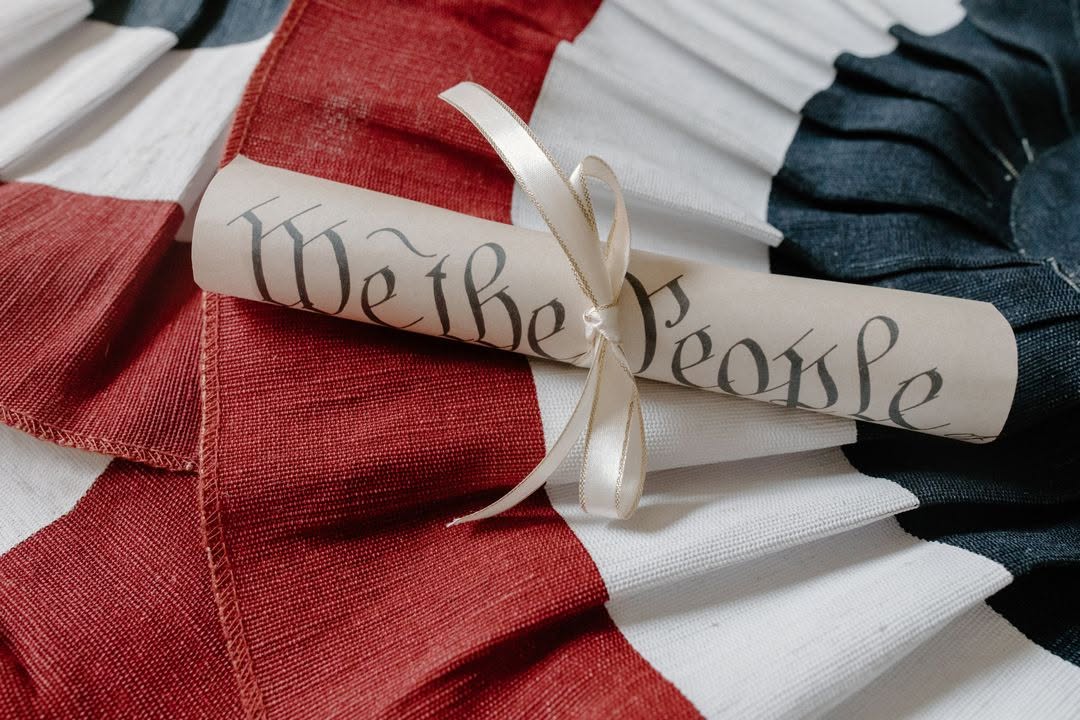
By contrast, the American Revolution produced the United States Constitution, the greatest governing document ever conceived by mere humans. The Founders understood that while times change, human nature does not. The Constitution they created provided the best possible means to restrain our darker angels.
Did the Founders get everything right? No they did not. Wood wrote that “although many modern historians have called the Revolution’s inability to free all slaves its greatest failure, they have committed the great sin of anachronism by assuming that everyone in the past must have known that slavery was an evil. These historians have not fully appreciated that the Revolution defied a world that for the millennia had taken slavery for granted. It was the Revolution that for the first time in history made slavery a problem, and it led to the first instance of states abolishing the practice.”
Wood conceded that the Founders’ idea of equality was of its time. But nonetheless, he wrote, “Equality became so potent for Americans because it came to mean that everyone was really the same as everyone else, not just at birth, not in talent or property or wealth, and not just in some transcendental religious sense of the equality of souls. Ordinary Americans came to believe that no one in a basic down-to-earth and day-in-and-day-out manner was really better than anyone else. That was equality as no other nation has ever quite had it.”
Wood wrote that to “base a society on the commonplace behavior of ordinary people may be obvious and understandable to us today, but it was momentously radical in the long sweep of history up to that time.” Viewing it that way, there was no reason to believe that these disparate colonies would agree to come together as one nation, united in the common cause of life, liberty and the pursuit of happiness.
That last term, “the pursuit of happiness,” wasn’t just a flowery rhetorical flourish, it was a unique element that further set apart the American Revolution. Never before had a group of people formed a system of government that actually thought about – and strove to make as a priority – the individual citizen’s right to pursue happiness.
To call America’s founding a stunning achievement is a massive understatement. The Founders are sometimes dismissed as being nothing more than rich white men who were simply looking out for themselves. This is an ignorant and ill-formed opinion. True, many of the Founding Fathers were well-off, ‘landed gentlemen” in the parlance of the day. But that made them the very people who had the most to lose by an upheaval, and the most to gain by maintaining the status quo. If you’re doing well under the current regime, if you have money and land and prestige and power, why would you want to sign a document that seeks to overthrow that system, at the risk of “our Lives, our Fortunes, and our sacred Honor?”
On this, the 250th birthday of America, I would love to see a diminishment of the sweeping cynicism and derision aimed at America, and instead find a return to the full-throated, unabashed adoration of our country. From its miracle founding through 250 years of striving always to “form a more perfect union,” America deserves our unbridled love.
Happy 250 America!!!